



Table of Contents
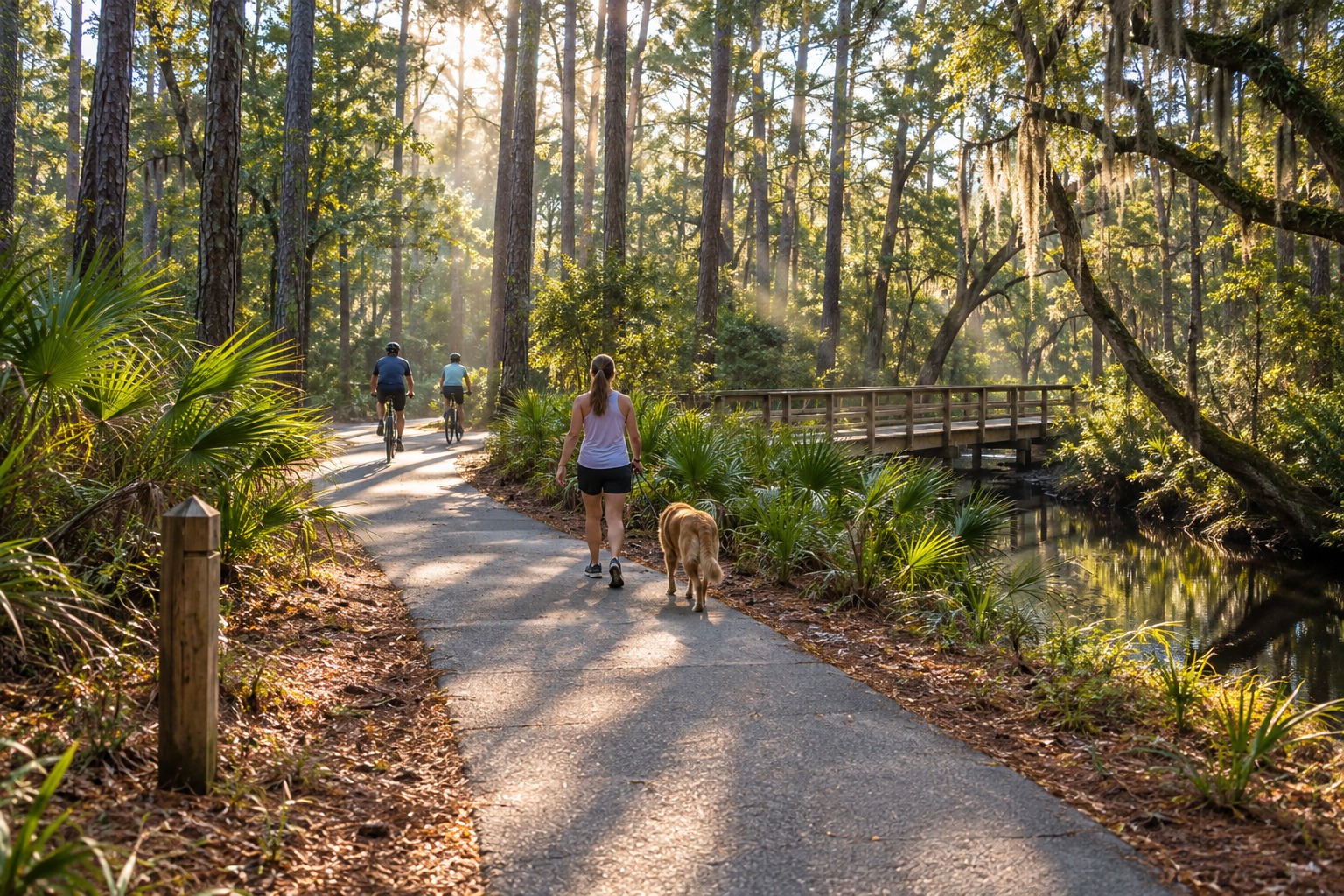
Stand on the Conway Riverwalk on an October morning and the Waccamaw River slides past the old brick storefronts the way it has for two centuries, brown and slow and lined with cypress. Fifteen miles to the east, the Atlantic rolls onto the sand at Myrtle Beach. Between the two lie pine woods, farmland, the Intracoastal Waterway and an old railroad bed, and for years people on the Grand Strand have talked about the day a person could walk or ride a bicycle from one to the other without ever sharing a lane with a car.
That day is still a long way off, but in the fall of 2026 Horry County took the first serious step toward it. The county is writing a trail master plan whose primary goal is a continuous walking and biking trail between Conway, the historic county seat, and Myrtle Beach. Residents spent the late summer and early fall dropping pins on an interactive map to say where they want to go, and public input meetings are planned for November.
For visitors who come to North Myrtle Beach to walk, run and ride, the plan is worth understanding. Here is what the county has proposed, how it might be built and paid for, and, while the planners do their work, where you can already find good miles on foot or on two wheels.
What Horry County Is Planning
Horry County announced the trail master plan in late August 2026 and framed it around one primary corridor: a continuous trail linking Conway with Myrtle Beach and, by extension, the county’s historic center with the Grand Strand. Secondary connections could reach into surrounding communities and rural areas. The county says the plan will review existing trails, identify gaps and opportunities, and set priorities for a safe, connected network that serves both residents and visitors, with better access to schools, parks and services along the way.
What makes the effort different from earlier trail talk is the way it is being drawn. Rather than sketching routes in advance, planners asked residents to shape them. On the county’s interactive map, people could place green pins at destinations they want to reach, red pins at problem spots and blue pins where they see a chance for a new connection. Rajiv Myana, the county’s deputy planning director, told WBTW that the feedback helps planners understand current conditions, where people want to go and what they expect from a trail. By mid-October, hundreds of suggestions had come in, including a request for a safer way for pedestrians to cross the Intracoastal Waterway near the Horry County Bike and Run Park.
The Rail-to-Trail Idea Behind It
The Conway-to-Myrtle Beach corridor has a natural spine. An old railroad line runs between the two cities, and the idea of turning it into a trail has circulated for years. At a 2022 trail summit at Coastal Carolina University, planners discussed a roughly 35-mile rail trail from the Myrtle Beach train depot to Aynor, built in phases over as long as 20 years, and Conway’s city administrator estimated the cost at about $2 million per mile, WMBF reported at the time.
The 2026 plan brings that vision down to earth. County maps now show several possible route options for the Conway-to-Myrtle Beach link, each with its own cost estimate, and no route has been chosen. State lawmakers have set aside $2 million for the path, which covers only a fraction of most options, so the county is looking at grants and partnerships. Kimberly Clifford, the county’s public information officer, told WPDE that if those partnerships come together, Conway would build its section, Myrtle Beach would build its section and the county would build the connections between them.
What the Trail Could Look Like
The survey asked about more than routes. Residents weighed in on features such as golf cart access, bike access, pet stations, water fountains and nighttime lighting, along with benches and other amenities. Ed Mondello, a local trail user, told WBTW that green space for exercise is one of the things that draws people to a place, and that practical details matter, such as a well-lit parking lot, changing rooms, restrooms and fresh water.
Clifford pointed out that a trail is not only for recreation. It would serve people who cannot drive, open the possibility of walking to work for those who live near it, and take some vehicles off local roads. In a county where visitors and residents alike spend a lot of time on Highway 17 and Highway 501, that argument carries weight.
| Detail | Status as of October 2026 |
|---|---|
| Primary corridor | Continuous trail between Conway and Myrtle Beach |
| Route | Several options mapped with cost estimates; none selected |
| Funding so far | $2 million allocated by state lawmakers; grants and partnerships being explored |
| Who would build it | Conway and Myrtle Beach their own sections; the county the connectors, if partnerships form |
| Public input | Online survey closed Oct. 12, 2026; public meetings planned for November 2026 |
| Related work | Depot Road repaving near Conway, followed by a city bike lane to the Kingston Ferry on the Waccamaw River |
What Happens Next
The plan is in its early stages. The online survey closed on October 12, and the county intends to hold public input meetings in November on the latest draft. A finished master plan would then guide which segments are built first and how future money is spent. Conway is already moving on its end: once Depot Road outside the city is repaved, the city plans to take ownership of it and add a bike lane connecting to the Kingston Ferry along the Waccamaw River, and surveyors were expected to stake out a boardwalk area at the ferry landing in late September. Our article on the Lake Busbee waterfront project in Conway covers another piece of the city’s riverfront plans.
Visitors should treat all of this as a long game. The first segments could take years, and a full Conway-to-coast ride is a vision for the next decade rather than next summer. But the pieces are starting to line up, and anyone who returns to the Grand Strand year after year will be able to watch it happen.
Where to Walk and Ride on the Grand Strand Today
There is no need to wait for the trail to enjoy the outdoors here. In North Myrtle Beach, the House Creek boardwalk in Cherry Grove carries walkers over the salt marsh, and Heritage Shores Nature Preserve offers short trails and marsh views at the north end of town. Our guide to nature trails and parks in North Myrtle Beach rounds up the rest. In Little River, Vereen Memorial Gardens has boardwalks and wooded paths along the waterway.
For a longer outing, downtown Conway’s Riverwalk follows the Waccamaw beneath moss-draped oaks, and in October the whole town is dressed for its City of Halloween season, which our Conway City of Halloween guide describes. Mountain bikers head to the Horry County Bike and Run Park in Carolina Forest, and paddlers can explore the marsh creeks and the river; our guide to fishing on the Grand Strand covers the water from another angle. The beach itself remains the best trail of all, and a low-tide walk from Cherry Grove through Ocean Drive and Crescent Beach to Windy Hill covers the full length of North Myrtle Beach on firm sand.
Where to Stay for an Active Grand Strand Trip
Walkers and cyclists tend to want the beach close and the car parked. Our oceanfront home rentals put the sand at the end of the dune walkover and have room to store bikes under the house, while our oceanfront condo rentals suit couples who plan to spend their days outside. Guests who want the marsh as well as the ocean can look at our channel and inlet homes and marsh and channel homes in Cherry Grove, and our Cherry Grove rentals are closest to the House Creek boardwalk. Travelers with a dog who plan on long walks should book one of our designated dog-friendly rentals. The quieter months are the best for trail time, and our page on fall and spring vacations explains why.
Frequently Asked Questions
Come walk the beach now and watch the trail take shape over the years ahead. Thomas Beach Vacations has been part of North Myrtle Beach since 1962, and our oceanfront homes and oceanfront condos put the sand, the marsh and the Grand Strand’s best outdoor miles at your door. Browse availability at www.northmyrtlebeachvacations.com or call our local team at (843) 273-3001.
Sources: WBTW (Oct. 12 and 13, 2026); WPDE (Oct. 12 and 13, 2026); Horry County Government, Help Shape Horry County’s Future Trail Network (Aug. 25, 2026); WMBF (May 12, 2022) on the proposed Myrtle Beach-to-Aynor rail trail. Plans, routes, funding and meeting dates are subject to change; confirm with Horry County before relying on them.