




Table of Contents
In 1927, a golf course opened in the pines behind a quiet stretch of South Carolina beach. It had no company. The nearest competition was hundreds of miles away, the town around it was barely a town, and the men who cut those first fairways out of the dunes and longleaf could not have known what they were starting.
What they were starting, it turns out, was everything. In 2027, Myrtle Beach will celebrate 100 years of golf — a full century since Pine Lakes Country Club opened as the area’s first course and set the Grand Strand on the road to becoming the self-proclaimed, and rarely disputed, Golf Capital of the World. Today the region counts roughly 90 courses along 60 miles of coastline, hosts more than three million rounds a year, and welcomes traveling golfers by the hundreds of thousands. Every one of those tee times traces its lineage back to that single 1927 layout.
The centennial is more than a birthday. For the golf travel market, 2027 is shaping up as a landmark year — a once-in-a-lifetime reason for every golfer who has ever loved this coast to come back, and for every golfer who hasn’t yet to finally make the trip. Here’s the story of the first hundred years, what’s happening at the course where it all began, and how to plan your own piece of the celebration from a home base in North Myrtle Beach.
1927: The Granddaddy Arrives
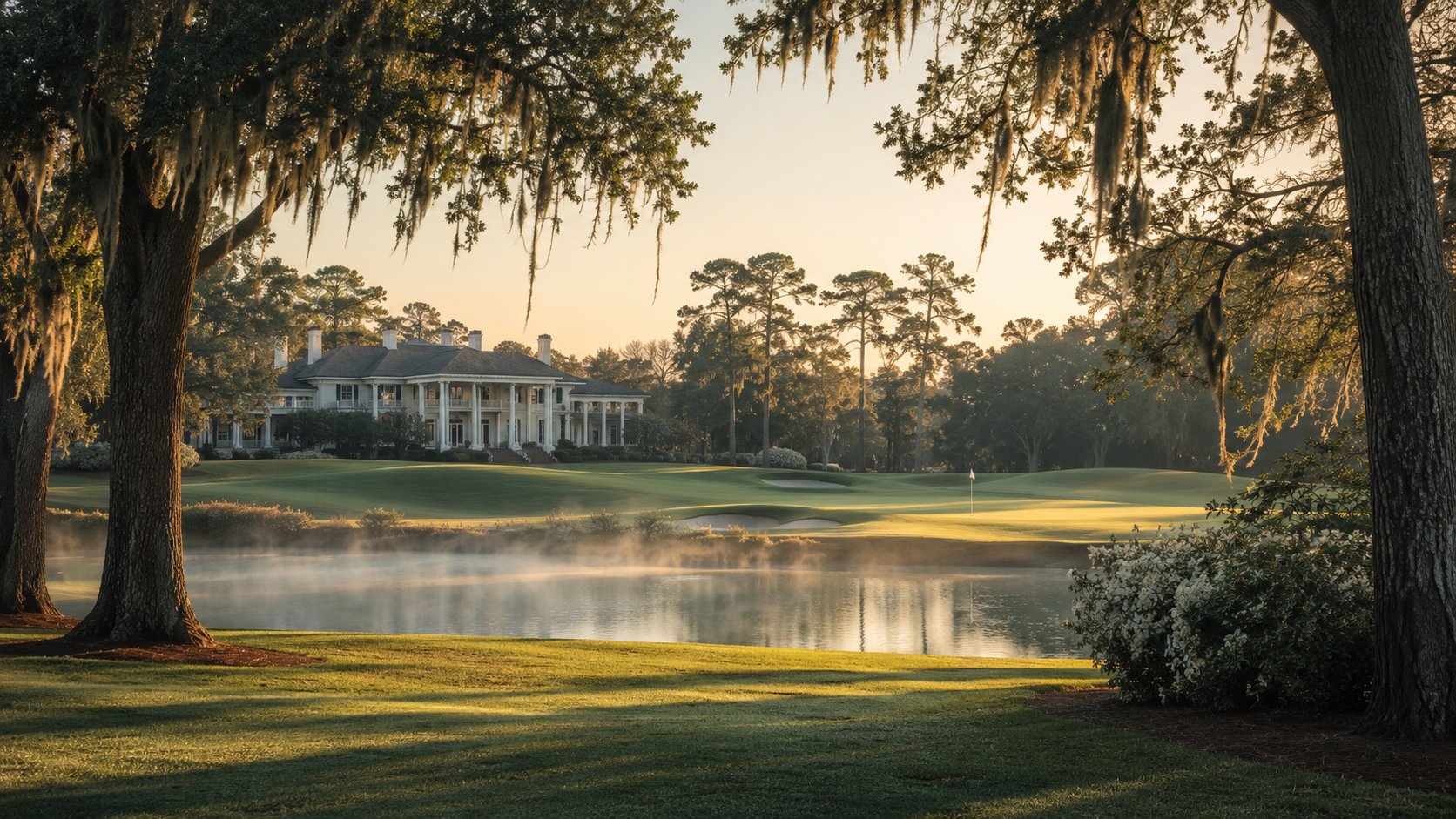
Pine Lakes Country Club opened in 1927 under a different name — Ocean Forest Country Club — as the ambitious centerpiece of a resort vision for the young beach town. Its designer was no ordinary architect: Robert White, a Scotsman from St. Andrews who had become the founding president of the PGA of America and a co-founder of the American Society of Golf Course Architects. White laid his holes over naturally rolling ground less than half a mile from the Atlantic, working with the dunes rather than against them, and by 1928 the club boasted 27 holes and a columned clubhouse with 38 guest rooms.
The nickname came later, and it stuck: “The Granddaddy.” For decades the club leaned into its role as the area’s original, greeting guests with kilted bag attendants, spring mimosas, and cups of clam chowder in the cold months. The clubhouse earned a place on the National Register of Historic Places, and it holds one more distinction that has nothing to do with golf and everything to do with sports history: on April 30, 1954, a group of Time-Life executives gathered inside and sketched out the idea for a new weekly magazine. They called it Sports Illustrated. A framed copy of the first cover still hangs in the clubhouse pub.
Eventually consolidated to 18 holes, the par-70 layout retains its Golden Age character — a course of demanding par 4s and old-growth charm, highlighted by the 14th hole framed against the Ocean Boulevard skyline. Nearly a hundred years on, the course that started it all remains one of the rounds every visiting golfer should play at least once, precisely because of where it sits in the story.
A Century in the Making: Milestones of Myrtle Beach Golf
A hundred years compresses poorly, but the arc of the Grand Strand’s golf story runs through a handful of turning points — from a lone course in the pines to a coastline where golf itself became the economy’s engine.
| Year | Milestone |
| 1927 | Pine Lakes (then Ocean Forest Country Club) opens as Myrtle Beach’s first golf course, designed by Robert White, first president of the PGA of America. |
| 1928 | The club completes 27 holes and its landmark clubhouse, later listed on the National Register of Historic Places. |
| 1948 | The Dunes Golf & Beach Club opens, a Robert Trent Jones design that becomes the area’s tournament flagship — and today hosts the PGA TOUR’s Myrtle Beach Classic. |
| 1954 | Sports Illustrated is conceived by Time-Life executives inside the Pine Lakes clubhouse. |
| 1980s–2000s | The great course boom: designs from Arnold Palmer, Jack Nicklaus, Pete Dye, Tom Fazio, Robert Trent Jones, and Mike Strantz push the Grand Strand toward 100 courses and a worldwide reputation. |
| 2024 | An economic impact study measures golf’s contribution to the regional economy at $1.6 billion, with 759,000 traveling golfers and more than three million rounds played. |
| 2027 | Myrtle Beach celebrates 100 years of golf as Pine Lakes marks its centennial. |
How One Course Became the Golf Capital of the World
For its first two decades, Pine Lakes had the beach to itself. The Dunes Club arrived in 1948, and then the floodgates opened slowly, then all at once. The golf package — lodging and tee times bundled into one trip, an idea the Grand Strand did as much as anywhere to perfect — turned a regional beach town into a national golf pilgrimage. Course by course, decade by decade, the count climbed toward one hundred, with layouts from nearly every great architect of the modern era threaded between the ocean, the Intracoastal Waterway, and the Carolina pine forests.
The numbers behind the modern market tell the story plainly. The most recent comprehensive study, covering 2024, found 78 courses operating across the region, golf supporting more than 13,000 jobs, and traveling golfers pouring over $700 million in direct spending into local lodging, dining, and entertainment on their way to 1.4 million visitor rounds. Tracy Conner of the Myrtle Beach Area Golf Course Owners Association framed it as nearly a century of golf differentiating and developing the entire region, while Golf Tourism Solutions’ Ryan Cannon called the impact on the area essentially impossible to overstate.
Which brings us to why 2027 matters so much. Kyle Oland, marketing director for Golf Tourism Solutions, has noted that golf is simply in the destination’s DNA — a year-round game here, with more courses per capita than anywhere in the world, all of it dating to that first course in 1927. A centennial gives the entire industry, from the courses to the golf packagers to the vacation rental companies, a once-a-century occasion to celebrate — and gives traveling golfers the best excuse in a hundred years to book the trip.
Pine Lakes Today: Dressed Up for Its 100th Birthday
The Granddaddy is not coasting into its centennial — it has spent the last several years getting ready for it. Founders Group International, which took over the course in 2014 and operates more than 20 Grand Strand layouts, has treated the anniversary as a deadline. Company president Steve Mays has said the goal was to make sure Pine Lakes is exactly the course it wants to be when the 100th arrives.
Architect Craig Schreiner — who led the 2006-era restoration that used 1937 aerial photographs of White’s original design to recover the course’s period feel — returned for a comprehensive greens and bunker renovation in 2021 that sharpened the classic 1920s character. Most recently, heading into the centennial, the course expanded from four sets of tees to six, adding new forward tees and a blended combo option. Schreiner’s reasoning, as he has explained it, is that giving every golfer the option to move up — juniors, women, beginners, and veterans alike — makes the course more enjoyable and puts better numbers on the scorecard, without touching the layout’s historic soul.
The result is a hundred-year-old course in arguably the best shape of its life, positioned in the heart of the central Myrtle Beach golf corridor and priced within reach of any golf package. If your group plays one round for history’s sake in 2027, this is the round.
Planning a Centennial Golf Trip
A centennial-year itinerary practically writes itself: play the history. Start at Pine Lakes, where the story began. Add The Dunes Club era’s spiritual successors and the boom-years masterpieces — and because Pine Lakes belongs to the Founders Group family, packages like the Founders Group $100 Rewards Package make it easy to pair The Granddaddy with sister courses such as King’s North, TPC Myrtle Beach, and World Tour in a single trip, earning a $100 gift card along the way. Groups chasing the north end’s best can build around the Myrtle Beach Elite Package, with Tidewater, Arcadian Shores, Arrowhead, and Prestwick, or roam the twenty-plus layouts of the Myrtle Beach Golf Trail.
This is exactly the kind of trip where a local golf director earns their keep. Thomas Golf Vacations — the golf division of the same family company that has served this coast since 1962 — books thousands of rounds a year, keeps current on course conditions and replay deals, and builds custom packages around your group’s size and appetite. Browse the full Myrtle Beach course directory, explore current golf package deals, or call the golf desk directly at (843) 273-3007 to start sketching a centennial itinerary.
Getting here is the easy part: Myrtle Beach International connects nonstop to more than 50 cities, and our golfer’s guide to MYR flights covers routes, golf bag rules, and rental cars. Traveling with the family? The summer Kids Play Free program puts juniors on 50+ courses at no charge, and every July the Family Golf Week tournament turns the golf trip into a family reunion — fitting warm-ups for a centennial year built on generations of golfers bringing the next generation along.
The North Myrtle Beach Home Base
Here is the veteran move for any Grand Strand golf trip, centennial or otherwise: stay in North Myrtle Beach. The town sits within fifteen minutes of the Barefoot Resort courses, Tidewater, Surf Club, and the Little River cluster, within easy reach of the north-end course lineup, and a straight shot down Highway 31 from Pine Lakes itself — all while putting the ocean at your doorstep instead of a hotel parking lot.
Each of the four beach sections has its own personality as a golf headquarters. Cherry Grove Beach sits closest to Tidewater and the state-line courses; Ocean Drive puts the Main Street restaurants and nightlife within walking distance of the 19th hole; Crescent Beach and Windy Hill offer wide, quiet sand at the south end, nearest to Barefoot’s four championship layouts. Big groups spread out comfortably in oceanfront home rentals — some sleeping a dozen or more golfers under one roof — while couples and foursomes do well in oceanfront condos with the morning coffee view that makes a 7:40 tee time feel civilized. Between rounds, the full menu of things to do in Myrtle Beach and the area events calendar keep the non-golfers in the group just as busy.
Frequently Asked Questions
Be Here When the Second Century Starts
A hundred years of golf deserves more than a weekend. Thomas Beach Vacations — serving this coast since 1962 — offers oceanfront homes and condos across all four North Myrtle Beach sections, minutes from the courses that built the Golf Capital of the World, while our Thomas Golf Vacations team handles the tee times. Browse availability at www.northmyrtlebeachvacations.com or call our local team at (843) 273-3001 — and let’s make sure your group is on the tee when Myrtle Beach golf turns one hundred.
Sources: Historical details via Pine Lakes Country Club, Discover South Carolina, and Myrtle Beach Golf Trips; economic figures from the 2024 Myrtle Beach golf economic impact study by the National Golf Foundation, Golf Tourism Solutions, the Myrtle Beach Area Golf Course Owners Association, and SC PRT; renovation details via Founders Group International and course reporting. Figures reflect the most recent published study year.