




Table of Contents
- Snowbird Season, Explained
- Why More Snowbirds Are Choosing the Carolina Coast
- Winter Weather in North Myrtle Beach, Honestly
- How Monthly Winter Rates Work — and the 90-Day Tax Break
- Picking Your Beach Section for the Season
- You Will Not Run Out of Things to Do
- Booking Your Winter Stay
- Frequently Asked Questions
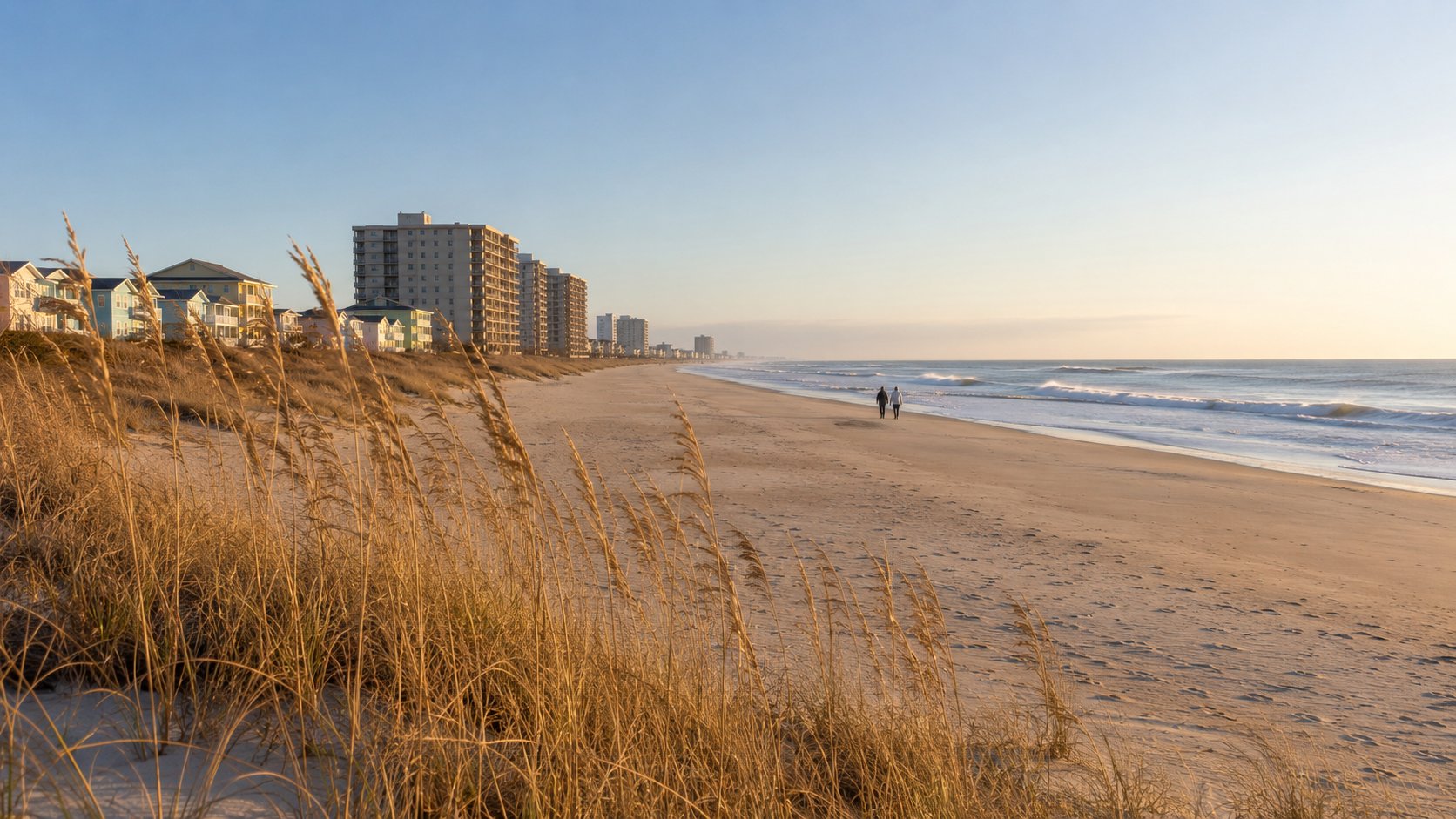
The first hard frost hits Ohio and upstate New York sometime in late October, and you can almost hear the garage doors going up. Suitcases into trunks, golf clubs on top, a forwarding note taped to the neighbor’s door. For thousands of winter travelers, the road south does not end in Florida anymore. It ends about 700 miles sooner, where Highway 17 crosses into North Myrtle Beach and the ocean turns that hard winter silver that locals will tell you is the prettiest the Atlantic gets all year.
They call themselves snowbirds, and North Myrtle Beach has been quietly perfecting the art of hosting them for decades. From October through March, the beach empties out, the pace slows down, and the oceanfront condos and beach houses that command premium summer rates become monthly winter homes at a fraction of the cost. The town stays open — the golf courses, the shag clubs on Main Street, the seafood houses, the theaters at Barefoot Landing — but the crowds go home. What is left is the version of the beach that people who live here love best.
If you have been thinking about trading one winter of gray skies and ice scrapers for a season of ocean-view mornings, this guide covers everything you need to know: when snowbird season runs, what winter here actually feels like, how monthly rates and South Carolina’s 90-day tax exemption work, and how to pick the right home base for two or three months by the sea.
Snowbird Season, Explained
On the Grand Strand, snowbird season generally runs from October through March, with the heart of it falling in January, February, and March — the months when winter bites hardest up north and the beach down here is at its calmest. Most winter guests book by the month, and many settle in for the full three-month stretch, arriving after the holidays and heading home when the daffodils come up back home.
The guests themselves come from everywhere winter is a serious business: Ohio, Pennsylvania, New York, New England, Michigan, and a steady contingent of Canadians who have been making the drive for generations. Some are retirees stretching their legs into a new season of life. A growing number are remote workers who realized their laptop works just as well with an ocean view. What they share is the discovery that a furnished oceanfront rental in the off-season often costs less per month than heating a house through a northern January — and comes with considerably better sunrises.
North Myrtle Beach suits the long-stay rhythm unusually well. It is a real town, not just a resort strip — with grocery stores, pharmacies, churches, a senior-friendly recreation scene, and a walkable Main Street — wrapped around nine miles of wide, uncrowded winter beach.
Why More Snowbirds Are Choosing the Carolina Coast
Florida wrote the snowbird playbook, but the Carolina coast has been steadily rewriting it, and the reasons are practical ones. The drive is the first. From most of the Midwest and Northeast, North Myrtle Beach is a full day closer than central or south Florida — one manageable day on the road instead of two, which matters when you are making the trip twice a season and maybe once more at the holidays to see the grandchildren.
The second reason is cost. Winter monthly rates here run well below what comparable oceanfront accommodations command in the traditional Florida snowbird markets, and everyday expenses — dinners out, greens fees, groceries — follow the same friendly math. The third is temperament. Winter on the Grand Strand is genuinely quiet. Traffic on Ocean Boulevard thins to a trickle, restaurants seat you on arrival, and the beach at 9 AM in February may hold more sandpipers than people. For travelers who found the year-round bustle of the bigger snowbird destinations exhausting, that calm is the whole point.
And then there is the golf. The Grand Strand’s dozens of championship courses stay open all winter, greens fees drop to their lowest of the year, and a string of 60-degree January days can fill a week with rounds that would cost double in high season. Winter golfers here play the same celebrated layouts the spring crowds fly in for — without the wait on the first tee.
Winter Weather in North Myrtle Beach, Honestly
Nobody should promise you a tropical January, and we won’t. What the Carolina coast offers is a mild, workable, often beautiful winter — the kind where a light jacket handles most days, hard freezes are uncommon near the water, and snow is rare enough that a dusting makes the local news and empties the shelves of milk and bread by nightfall. The ocean moderates everything: coastal winters here run noticeably gentler than even a few miles inland.
Here is the honest picture, month by month:
| Month | Typical Daytime Highs | What the Season Feels Like |
|---|---|---|
| November | Low to mid 60s°F | Sweater weather with plenty of beach-walk afternoons; fall color lingers along the waterway |
| December | Upper 50s to around 60°F | Crisp mornings, holiday lights, and the year’s most dramatic sunrises over the Atlantic |
| January | Mid to upper 50s°F | The quietest month — jacket weather with regular runs of mild, golf-worthy days |
| February | Around 60°F | Winter loosening its grip; camellias bloom and the first warm spells arrive |
| March | Mid 60s°F | Spring in all but name — azaleas, open windows, and the last uncrowded weeks before season |
Figures are typical historical averages for the North Myrtle Beach area and any given winter will vary — but the pattern holds. While the folks back home are shoveling out the driveway, you will more often than not be deciding between a beach walk and a back nine.
How Monthly Winter Rates Work — and the 90-Day Tax Break
Winter rentals work differently than summer vacation bookings, and the differences all favor the long-stay guest. Instead of nightly or weekly rates, participating properties offer discounted monthly rates for the off-season — typically available from fall through early spring. Because winter is the slow season, those monthly figures land dramatically below what the same oceanfront condo or beach house earns per month in July. You are essentially renting the beach at its wholesale price.
Then there is a detail of South Carolina tax law that surprisingly few winter travelers know about. Under state law, accommodations supplied to the same guest for 90 or more continuous days are exempt from the sales tax on accommodations that applies to shorter vacation stays. In plain terms: book the full winter — roughly January through March, or any stretch of at least 90 consecutive days — and the accommodations tax that vacationers pay on a week’s stay does not apply to your booking. For a three-month stay, that exemption adds up to real money, and it is one more reason so many snowbirds commit to the whole season rather than a single month. Our reservations team can walk you through exactly how it applies to the dates and property you have in mind.
One planning note: winter monthly rates and availability vary property by property. Not every home in a rental program offers monthly terms, which is why we maintain a dedicated collection of long term rentals in North Myrtle Beach — currently 89 condos and beach homes across town that welcome extended stays, each listed with bedrooms, baths, sleeping capacity, and location so you can compare your options side by side.
Picking Your Beach Section for the Season
North Myrtle Beach is really four beach neighborhoods stitched together along nine miles of sand, and when you are staying for months rather than days, the neighborhood you choose shapes the whole season.
Cherry Grove Beach, at the northern end, is the quiet one — a peninsula of beach houses threaded with saltwater channels, where winter mornings mean herons in the marsh and anglers working the Cherry Grove Fishing Pier. Snowbirds who want stillness, water views on two sides, and a residential feel gravitate here, whether to a channel-side cottage or a tower like Prince Resort near the pier.
The Ocean Drive section is the social heart. Main Street — home of the shag, South Carolina’s official state dance — keeps its music going all winter, and staying nearby means the coffee shop, the drug store, and the dance floor at Fat Harold’s Beach Club are all a short stroll from your door. Condo buildings like the Ashworth, Avista Ocean Resort, and Ocean Bay Club put winter guests right in the middle of it, steps from both the sand and the town’s year-round pulse.
Crescent Beach runs down the middle of town and offers the deepest bench of winter-friendly condos — towers like Crescent Shores and Bahama Sands with the full-size kitchens, in-unit laundry, and indoor pools that make a three-month stay feel like home. And Windy Hill, at the south end, sits closest to Barefoot Landing’s restaurants, shops, and theaters — a fine fit for snowbirds who plan to make dinner-and-a-show a winter habit.
Whichever section calls to you, the choice usually comes down to space: our oceanfront condos suit couples wintering light, while our oceanfront home rentals give snowbirds room for the parade of visiting children and grandchildren that a beach house in February reliably attracts.
You Will Not Run Out of Things to Do
The myth about beach towns in winter is that they roll up the sidewalks. North Myrtle Beach does not. The golf courses play all season. The Alabama Theatre at Barefoot Landing runs its show calendar through the winter months, and the shag clubs on Main Street — Fat Harold’s, Duck’s, the OD Arcade — keep the beach music playing for the year-round dance crowd, which swells each January when shag dancers from across the Southeast traditionally return to Main Street for their midwinter gathering. Restaurants that require a wait in July greet you like a regular in February, and by your second week, several of them will actually know your name.
Add the everyday pleasures — flea markets and antique runs, fishing off the pier, day trips to the Brookgreen Gardens sculpture grounds or the historic seaport of Georgetown, and long, empty-beach walks that reset a person’s whole nervous system — and the season fills itself. We keep a running guide to things to do in Myrtle Beach and an area events calendar that both stay busy straight through the winter, so you can layer in as much or as little as you like.
Booking Your Winter Stay
Here is the piece of local wisdom that matters most: the best winter rentals go early. Returning snowbirds are creatures of habit — many rebook the same condo for next winter before they have finished unpacking from this one — so the choicest oceanfront units for January through March are often spoken for by late summer or early fall. If you have your eye on a full-season stay, reaching out in late summer or autumn gives you first pick; even for a single winter month, earlier is always better.
The booking itself is refreshingly simple. Every property in our long-term collection comes fully furnished and equipped — linens, kitchenware, the works — so moving in amounts to carrying suitcases up from the car and deciding which balcony chair is yours. Browse the current lineup of long term rentals in North Myrtle Beach, note the properties that fit your party and your preferred beach section, and call our local reservations team to talk monthly rates, dates, and that 90-day tax exemption. We have been matching winter guests to the right beach home for over 60 years, and it remains one of the most satisfying parts of the job — because snowbirds, more than any other guests, come back.
Frequently Asked Questions
Spend This Winter Where the Sand Is
Somewhere up north right now, a snow shovel is waiting for you. It can keep waiting. Thomas Beach Vacations has spent more than 60 years helping guests fall in love with North Myrtle Beach, and our collection of 89 long term rentals in North Myrtle Beach — oceanfront condos, channel-side cottages, and beach houses across all four beach sections — makes wintering here as easy as picking your view. Browse the collection at www.northmyrtlebeachvacations.com or call our local reservations team at (843) 273-3001 to talk monthly rates, availability, and the 90-day tax savings. The beach is quieter in winter, the sunrises are sharper, and your spot in the sand is open.
Sources: South Carolina Department of Revenue accommodations tax guidance; historical climate averages for the North Myrtle Beach area; Thomas Beach Vacations long-term rental listings. Rates, availability, tax treatment, and seasonal details are subject to change — confirm specifics with the reservations team when booking.