




A Stronger Shoreline Ahead: How Beach Renourishment Protects the Grand Strand for Years to Come
Table of Contents
There’s a certain rhythm to life along the Grand Strand—waves rolling in, tides shifting, footprints appearing and fading as quickly as summer memories. But every so often, the coastline needs more than time and tide to heal. That’s where the 2025–2026 Beach Renourishment Project steps in, bringing renewed strength to the shoreline that so many families treasure year after year.
What’s happening now across North Myrtle Beach, Myrtle Beach, Surfside, and Garden City isn’t just another construction effort. It’s a long-term investment in storm protection, tourism, wildlife, and the natural beauty that draws millions of visitors to the Grand Strand.
Below is everything vacationers—and locals—should know, told in a clear, friendly way that captures the story behind the work.
A Coastline Shaped by Storms
Hurricanes Ian (2022) and Debby (2024) carved noticeable erosion into the beaches of Horry County. While storms are a natural part of coastal life, they can strip away sand faster than nature can rebuild on its own. The result? Narrower beaches, weakened dunes, and higher risks during future storm seasons.
Beach renourishment steps in as a restorative force, replacing lost sand and reshaping the shoreline so it can continue protecting homes, communities, and wildlife. The last large-scale renourishment across the Grand Strand happened in 2019, making this year’s work both timely and necessary.
The Grand Plan: How Renourishment Works
Renourishment is a surprisingly complex process—part science, part engineering, part choreography.
Pumping Sand from Offshore
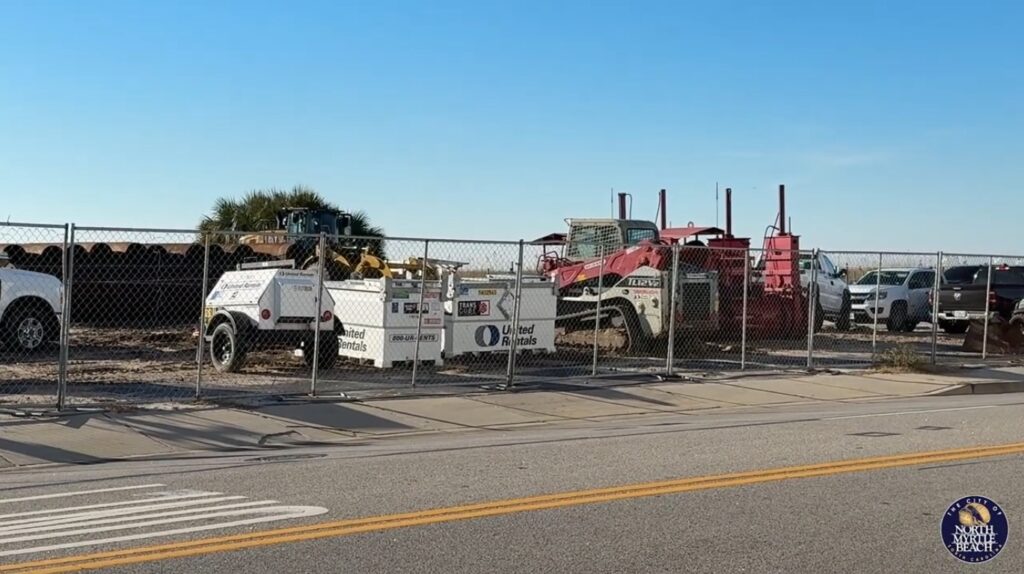
Miles from the coastline, a dredge collects sand from permitted offshore sites. This sand is carried through underwater pipes to pump stations onshore, where a mixture of sand and water flows onto the beach. From there, crews shape the sand into a new, healthy beachfront.
A Moving Work Zone
Only a 1,000-foot section of the beach is closed at a time, typically for just 2–3 days. The crews work around the clock, and as soon as one zone is complete, they move farther down the shoreline. Everywhere else, the beach stays open.
For families staying in North Myrtle Beach, Cherry Grove is the first section to be worked on, beginning December 15, 2026. Myrtle Beach follows in February, then Surfside and Garden City starting in April.
Two Million Cubic Yards of Sand
That’s roughly the equivalent of 200,000 dump trucks—enough to restore 26 miles of shoreline. The project is funded entirely at the federal level, with $72 million dedicated to protecting life, property, infrastructure, and tourism.
Protecting Wildlife While Rebuilding the Beach
The Grand Strand is home to sea turtles, shorebirds, and other marine life that depend on a healthy coastline.
Renourishment includes strict environmental safeguards, such as:
- Daily monitoring for sea turtles and birds
- Relocation of nests when necessary
- Stopping work immediately if wildlife enters the active zone
- Gentle shaping of sand to preserve natural contours
It’s a rare blend of engineering and environmental stewardship—reshaping the shore without losing sight of the life it supports.
What Visitors Can Expect
Even with large machinery and movement along the coastline, vacationers can still enjoy their time at the beach.
Short-Term Closures Only
Closed areas are well marked and small in size. The rest of the shoreline remains open, and many guests find the renourishment work fascinating to watch from a safe distance.
Safe Access Points
Barriers, designated crossovers, and signage help guests navigate around pipelines and equipment. The process is designed with safety and minimal disruption in mind.
Unexpected Beach Treasures
Fresh sand often uncovers seashells, sea glass, and even shark teeth that haven’t been exposed in years. Many beachcombers describe renourishment seasons as some of the most rewarding for discovery.
Why This Matters for the Future
When the waves settle and the equipment moves on, what remains is a stronger, wider beach—better able to withstand storms, support marine habitat, and welcome families each season.
Renourishment doesn’t just prepare the shoreline for tomorrow; it preserves the Grand Strand experience we know today. From sunrise strolls to sandcastle traditions, these moments endure because the coastline is cared for.
Where to Find Reliable Updates and Helpful Resources
Even though renourishment moves quickly along the shore, it’s natural for visitors—and locals—to want the latest details. Fortunately, several trusted organizations update the public in real time, making it easy to stay informed as the project progresses.
Visit Myrtle Beach – Community Resource Page
This page offers a clear overview of the renourishment effort, along with visitor-friendly explanations about what to expect during different project phases. It’s one of the best places for families to get quick, easy-to-understand updates about beach access.
Resource: https://www.visitmyrtlebeach.com/things-to-do/beaches/beach-renourishment
U.S. Army Corps of Engineers – Official Project Information
For readers who enjoy the deeper, more technical side of coastal engineering, the U.S. Army Corps of Engineers provides detailed information on timelines, work zones, and environmental protections.
Resource: https://www.sac.usace.army.mil/Missions/Civil-Works/Myrtle-Beach-Renourishment/fbclid/
Interactive Progress Map
One of the most useful tools is the real-time tracking map, showing exactly where crews are working along the coastline each day. Whether planning a morning walk or checking which section of the beach will be widened next, this map offers a simple, visual way to stay up to date.
Resource:
https://experience.arcgis.com/experience/266cbf20d5f84dec969d1e943cdbf618/page/Myrtle?org=cesac
Hospitality Partner Information Kit
For property owners, managers, and guests who want a deeper look at the project’s goals, schedule, safety guidelines, and FAQs, the Hospitality Partner Info Kit provides a clear, organized overview.
Resource:
https://docs.google.com/document/d/1Ame9HnxqC8KopVmzW9VMV4o4CXCyZnh_iZAYzc3dZtw/edit?usp=sharing
Together, these resources offer a complete picture—practical for visitors, helpful for locals, and reassuring for anyone eager to understand how the Grand Strand’s shoreline is being restored with care and expertise.
Plan Your Beach Vacation with Confidence
At Thomas Beach Vacations, we stay closely informed on renourishment progress and guide our guests with real-time updates, local insight, and information that helps them plan with ease. The beach remains open, the ocean still sparkles, and the Grand Strand continues to be one of the most welcoming destinations on the East Coast.
If you’re planning a getaway—or returning to a place you love—our team is here to help you choose the right rental and stay informed along the way.
Reach us anytime at 843-273-3003 or explore our homes and condos at www.northmyrtlebeachvacations.com.
Your vacation starts here—Thomas Beach Vacations.